Mastodon

Series


Articles that belong together, in the order they are meant to be read. Each series grows over time, and new parts show up here on their own.

Linux Foundationals

  1. Linux Foundationals: From Silicon to Userspace - The Boot and Init Chain

    The first article in the Linux Foundationals series. It traces a Fedora system from the UEFI handoff through shim and Secure Boot, MOK enrollment with mokutil, GRUB2 and Boot Loader Specification entries, the dracut initramfs and switch_root, all the way to systemd as PID 1. Then it covers units, dependencies versus ordering, targets, and how to measure and fix a slow boot with systemd-analyze.
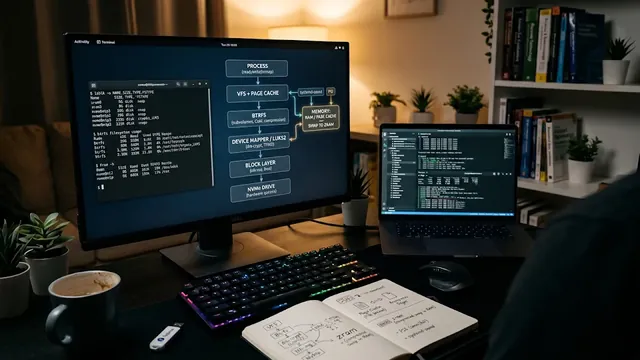
  2. Linux Foundationals: Storage and Memory - Block Layer, LUKS2, Btrfs and zram

    The second article in the Linux Foundationals series. It follows a read() from the VFS down to the NVMe drive on a Fedora system: the block layer, device mapper, LUKS2 and TPM2 auto-unlock with systemd-cryptenroll, then Btrfs subvolumes, copy-on-write, snapshots and transparent compression. The second half covers memory: page cache versus anonymous pages, why Fedora swaps to zram instead of disk, pressure stall information, and how systemd-oomd steps in before the kernel’s OOM killer does.

FreeBSD Foundationals

  1. FreeBSD Foundationals: Jails - From Chroot on Steroids to Full Virtual Networks

    The first in a series on FreeBSD fundamentals. This one covers Jails from the ground up: why they exist, how classic Jails differ from VNET Jails, what epair interfaces actually are, how bridges tie it all together, and what devfs rules do for your isolation story. Practical configurations included.

  2. FreeBSD Foundationals: ZFS - The Last Filesystem You’ll Ever Need

    The second in the FreeBSD Foundationals series. This one covers ZFS from philosophy to practice: why it exists, how pools and datasets work, what checksumming and self-healing actually do, how to tune recordsize, compression, and atime, how encryption works with key management, how snapshots and the hidden .zfs directory give you time travel, and how ZFS send/recv turns backup and migration into a solved problem. Includes a look at sanoid/syncoid for automated snapshot management.

  3. FreeBSD Foundationals: The Boot Process - From the Loader to Boot Environments

    The third in the FreeBSD Foundationals series. This one covers how FreeBSD actually boots: the stages from power-on to login, BIOS vs UEFI, the loader and loader.conf, the difference between read-only tunables and runtime sysctls, the modern way to load kernel modules with kld_list, managing it all safely with sysrc, a practical security-hardening baseline, and - the headline act - boot environments with bectl, the undo button that turns a broken upgrade into a thirty-second reboot.

  4. FreeBSD Foundationals: rc.d - The Service Framework That Fits in Your Head

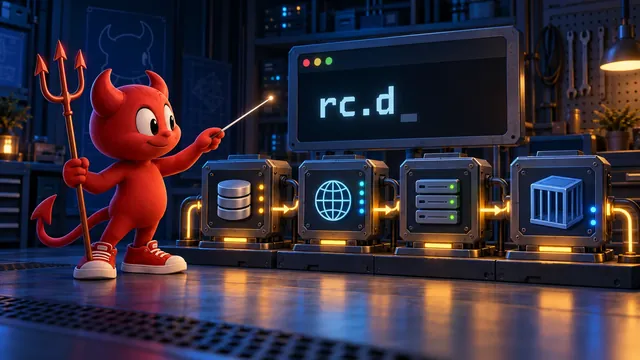
    The fourth in the FreeBSD Foundationals series. This one picks up where the boot article stopped, at the moment init runs /etc/rc. It covers how rc finds and orders scripts with rcorder, how rc.conf and its layers are really just shell, what rc.subr gives you for free, how to drive it all with service and sysrc (including inside jails), how to write a correct rc.d script for your own daemon using daemon(8) supervision, and the pidfile trap that makes “service stop” restart your process instead of stopping it. Then an honest audit of the rc.d scripts running my own Mastodon, Zigbee2MQTT and NetBox jails. Plus service jails, debugging, and an honest comparison with systemd units.

crawlfest

  1. Crawlfest: Building a Terminal Roguelike in Rust

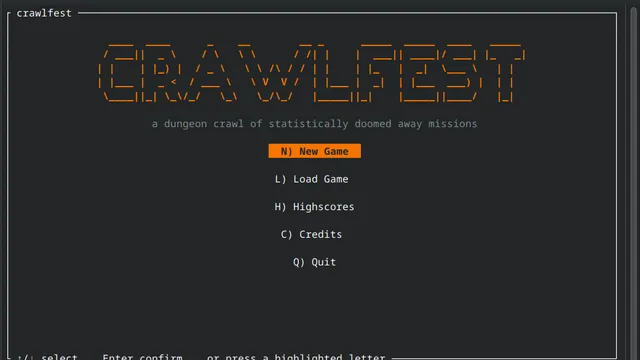
    For a few months now I have been building a terminal roguelike in Rust in the spirit of ADOM and NetHack. This article is about the technical groundwork: why ratatui and legion instead of a game engine, how the four map generators work (rooms, cellular-automata caverns, hand-drawn prefabs, and a hybrid of the last two), how field of view and A* pathfinding hook into my own map type through two traits, how content lives in RON files instead of code, and how save games avoid serialising the ECS at all.

AS201379 BGP Journey

  1. Running Your Own AS: BGP on FreeBSD with FRR, GRE Tunnels, and Policy Routing

    How I obtained my own AS number and IPv6 prefix, set up a FreeBSD BGP router with FRR, and built a tunnel overlay to bring globally routable addresses to servers that already have provider-assigned IPv6 - using dual-FIB policy routing to make both coexist.

  2. Running Your Own AS: Going Multi-Homed with iBGP and three Transits

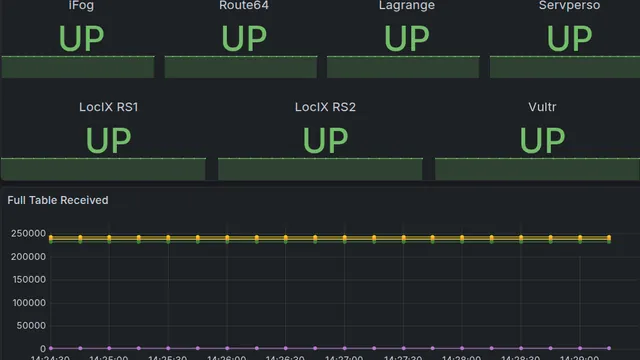
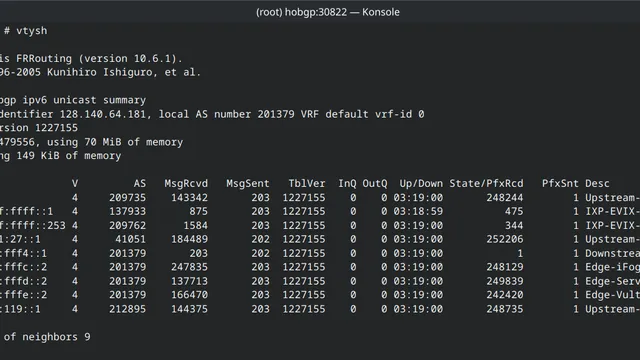
    Expanding a single BGP router into a two-PoP distributed network: adding a Vultr edge router with native BGP peering, three upstream GRE providers and iBGP to tie it together - plus the stateless PF rules that make transit routing actually work.

  3. Running Your Own AS: Joining an IXP with a Third Edge Router

    Connecting AS201379 to LocIX Düsseldorf via a dedicated edge router - adding direct exchange point peering to the existing multi-homed BGP setup, completing a three-router FreeBSD infrastructure with transit, native peering, and IXP connectivity.

  4. Running Your Own AS: Direct Hetzner Peering, a Fourth Edge, and Bringing the Home LAN into the Fabric

    Part 4 of the AS201379 journey: adding a fourth FreeBSD edge router at iFog with FogIXP peering, establishing direct BGP sessions with Hetzner, bringing the home network into the AS via an iBGP-speaking MikroTik, and a little traffic engineering to steer Deutsche Telekom traffic over Vultr.

  5. Running Your Own AS: An IXP over VXLAN, IPv4 on the Overlay, and a Config Spring Clean

    Part 5 of the AS201379 journey: joining EVIX, an internet exchange that hands out VXLAN tunnels instead of switch ports, carrying a routed IPv4 /29 across the IPv6 overlay with PF policy routing, the dual-FIB routing that makes a VPS work as both a normal host and a routed AS site, moving the downstream MikroTik onto WireGuard, and a long-overdue cleanup of four routers’ worth of accumulated configuration.

Kollect

  1. Kollect: The Native KDE Link Collector I Built for Myself

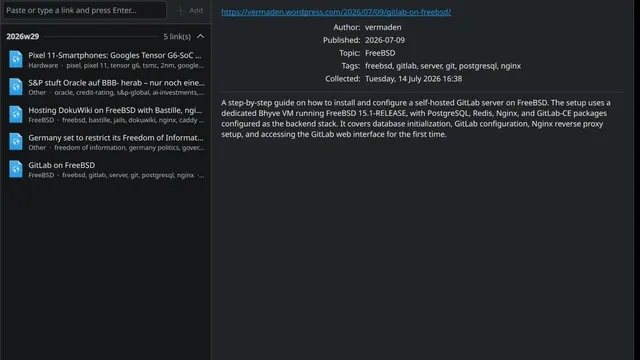
    Kollect is a small native Plasma 6 application I wrote to get interesting links out of browser tabs and into a durable collection. It uses Kirigami and C++ on the desktop, plain TOML files by default, optional multi-user server storage, OpenRouter-powered metadata, KWallet for secrets, and a proper Fedora RPM. The source is not public, but the design is worth documenting.

  2. Android Development on Fedora 44 Without Installing an Android Development Stack

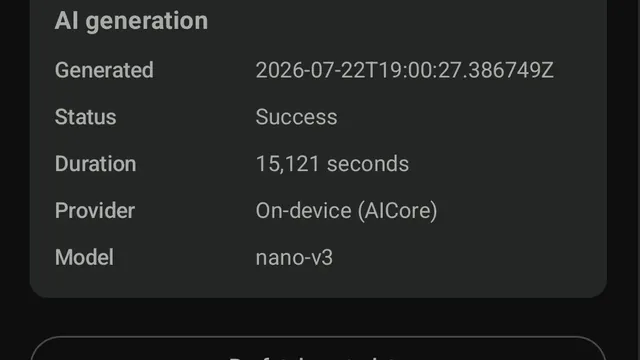
    I wanted to build a native Android companion for Kollect without filling Fedora 44 with a JDK, Gradle, Android SDKs, build tools, emulator images, and assorted mobile-development debris. My complete Android toolchain now lives in an Ubuntu 24.04 Distrobox instead. It builds the APK, talks to my phone over wireless ADB, runs the Android emulator, and even lets Kollect enrich links for free with Gemini Nano through Android AICore.

Unholy Filesystem Experiments

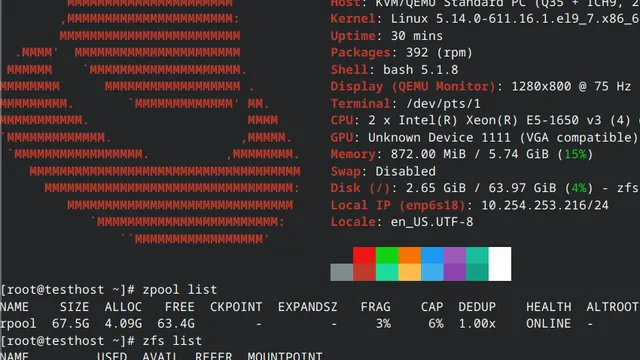
  1. RHEL on ZFS Root: An Unholy Experiment

    Running Red Hat Enterprise Linux on ZFS root is not supported. I did it anyway. Here’s how this cursed configuration came to be, why you shouldn’t replicate it, and what the proper alternative looks like.

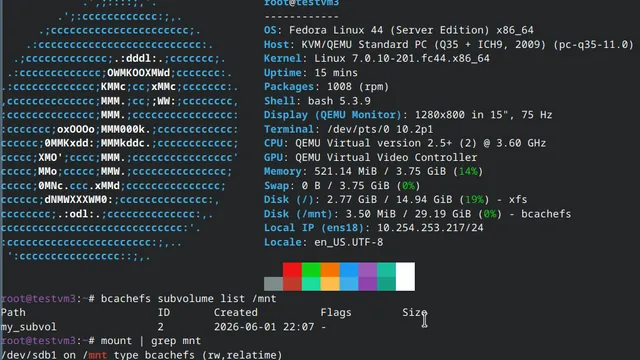
  2. bcachefs on RHEL 10.2: The Kernel That Said No

    A few months ago I bullied RHEL onto a ZFS root and it worked. This time I tried to get bcachefs running on RHEL 10, lost a whole evening to compile errors, and the kernel won. Here is the autopsy, plus what bcachefs actually is and why an out-of-tree filesystem and a conservative enterprise kernel are a terrible couple.