Mastodon

I’m Christian: Senior Consultant by day, FreeBSD person by conviction. Hands-on writeups about jails, BGP, self-hosting and Linux, all from infrastructure I actually run.

#ansible Articles


Newest

The Ansible Guy Finally Automates His Own Patching: FreeBSD, Jails, Proxmox and RHEL

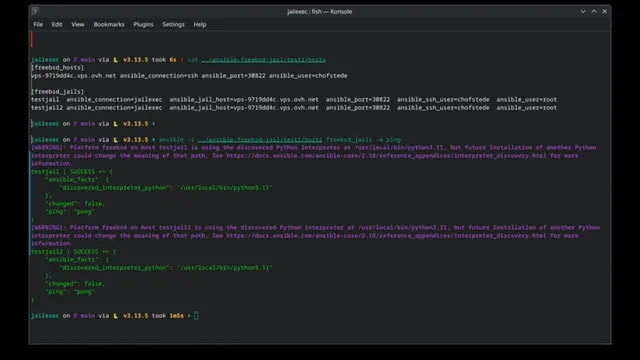
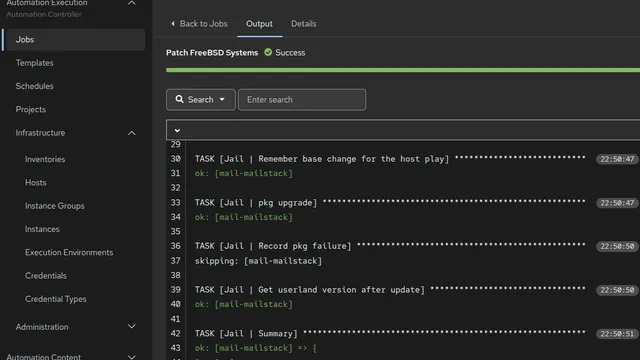
I write Ansible for a living, and I still patched most of my own servers by hand every week. This is how that ended: a Git-based inventory, defensive patch playbooks for FreeBSD (freebsd-update and pkgbase), Bastille thin jails, classic thick jails via my jailexec connection plugin, a Proxmox cluster and RHEL. Ansible Automation Platform runs it for me, but nothing here requires it. Plus the mistakes, including the reboot policy I should have checked before the first real run.

Earlier articles

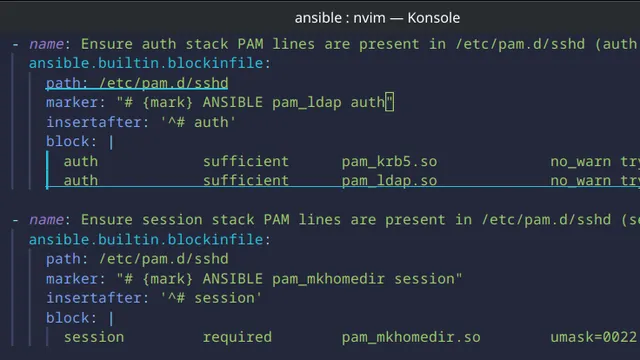
My Ansible Plugin Had a Jail Escape: CVE-2026-55074

For almost a year, my jailexec connection plugin let a compromised FreeBSD jail redirect a root-owned write onto the jail host. The input validation was fine. The problem was on which side of the jail boundary the paths were resolved. This is the story of the bug, the fix in 2.0.0, and the CVE that came with it.

Three Test Jails on a 512 MB Free-Tier VPS

A bug report against my jailexec connection plugin needed a real FreeBSD jail to reproduce. An idle free-tier VPS with 512 MB of RAM turned out to be plenty: pkgbase provides a 33 MB base userland, persistent jails need no idle processes, and three Python-equipped test targets added only 1.1 GB of disk use. This is the build, including the two sharp edges that cost me twenty minutes.

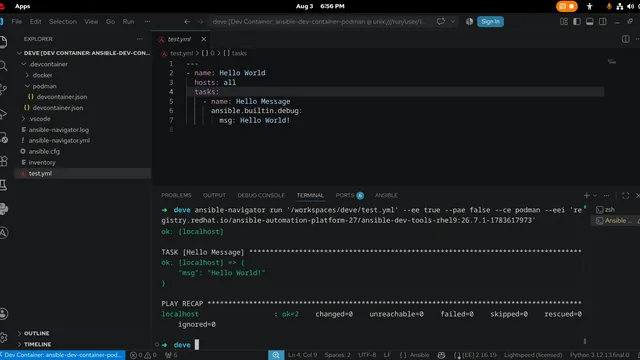
Sane Development Environments for Ansible Automation Code

Ansible content deserves something better than a laptop full of loosely related pip packages. My preferred setup puts the editor on RHEL, the Red Hat-packaged Ansible toolchain in a versioned Dev Container, and Podman underneath both development and Execution Environment workflows. The result is reproducible without pretending that upstream community bits and supported downstream product content are the same thing.

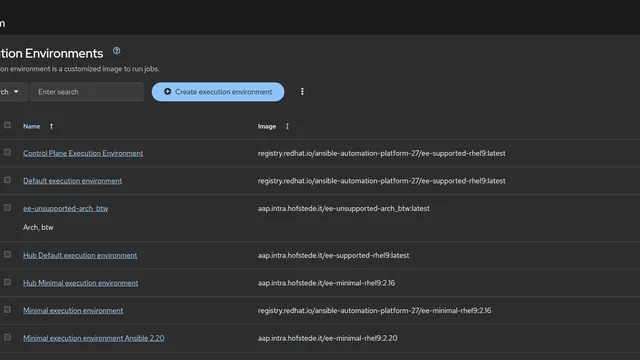
Reproducible Ansible with Execution Environments

A “control node” with a hand-curated venv works. Until it doesn’t. A colleague has different collection versions, CI installs a slightly newer Python library, and a playbook that ran yesterday now fails. Execution Environments turn the control node into a versioned container image. ansible-builder produces it, ansible-navigator runs against it, and the same artifact ships from your laptop into AAP/AWX without modification.