
Mastodon

I’m Christian: Senior Consultant by day, FreeBSD person by conviction. Hands-on writeups about jails, BGP, self-hosting and Linux, all from infrastructure I actually run.

#rhel Articles


Newest

An IdM Replica at Home: Kerberos That Survives a Dead Tunnel

My two Red Hat Identity Management servers live in a data center, and every SSH login at home depends on a WireGuard tunnel to reach them. This is how a third replica ended up in a bhyve VM on my home hypervisor: a DMZ that only exists inside the host, a tunnel that only worked in one direction, location-aware DNS that was less location-aware than I thought, and a test with the tunnel switched off.
Earlier articles

Linux Foundationals: From Silicon to Userspace - The Boot and Init Chain

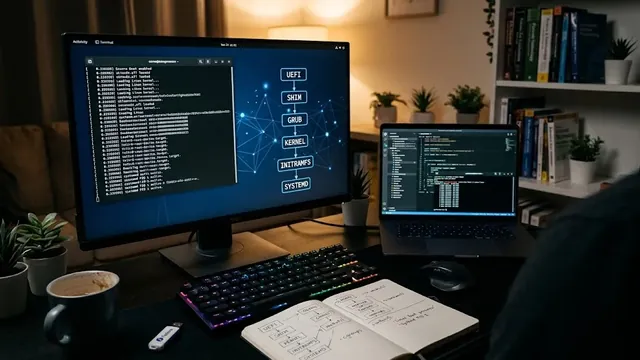
The first article in the Linux Foundationals series. It traces a Fedora system from the UEFI handoff through shim and Secure Boot, MOK enrollment with mokutil, GRUB2 and Boot Loader Specification entries, the dracut initramfs and switch_root, all the way to systemd as PID 1. Then it covers units, dependencies versus ordering, targets, and how to measure and fix a slow boot with systemd-analyze.

The Ansible Guy Finally Automates His Own Patching: FreeBSD, Jails, Proxmox and RHEL

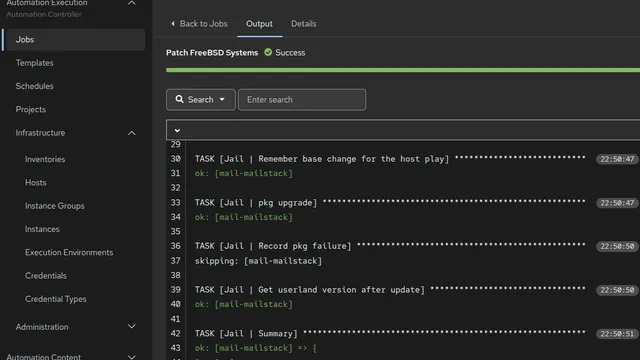
I write Ansible for a living, and I still patched most of my own servers by hand every week. This is how that ended: a Git-based inventory, defensive patch playbooks for FreeBSD (freebsd-update and pkgbase), Bastille thin jails, classic thick jails via my jailexec connection plugin, a Proxmox cluster and RHEL. Ansible Automation Platform runs it for me, but nothing here requires it. Plus the mistakes, including the reboot policy I should have checked before the first real run.

No Proxmox Backup Client for RHEL? Hold My Container Runtime

RHEL 10 on ARM64, a Proxmox Backup Server, and no convenient native client package. I borrowed the client from an old server container, mounted the host root filesystem read-only, and gave SELinux a very specific explanation. Five minutes later, I had an encrypted, incremental backup. There are caveats. Updated 2026-10-18 with a maintained client image for x86_64 and aarch64 on ghcr.io.

Sane Development Environments for Ansible Automation Code

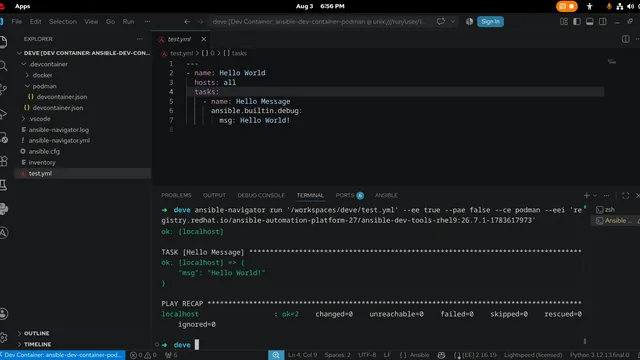
Ansible content deserves something better than a laptop full of loosely related pip packages. My preferred setup puts the editor on RHEL, the Red Hat-packaged Ansible toolchain in a versioned Dev Container, and Podman underneath both development and Execution Environment workflows. The result is reproducible without pretending that upstream community bits and supported downstream product content are the same thing.

bcachefs on RHEL 10.2: The Kernel That Said No

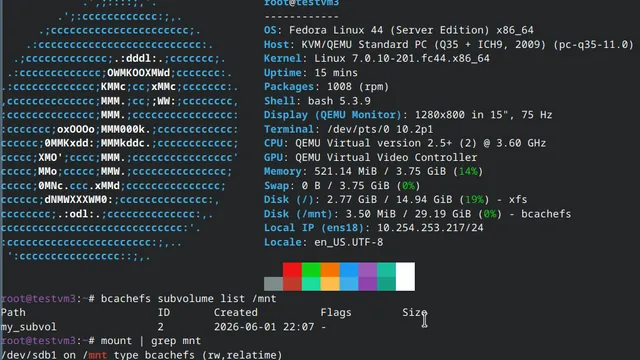
A few months ago I bullied RHEL onto a ZFS root and it worked. This time I tried to get bcachefs running on RHEL 10, lost a whole evening to compile errors, and the kernel won. Here is the autopsy, plus what bcachefs actually is and why an out-of-tree filesystem and a conservative enterprise kernel are a terrible couple.

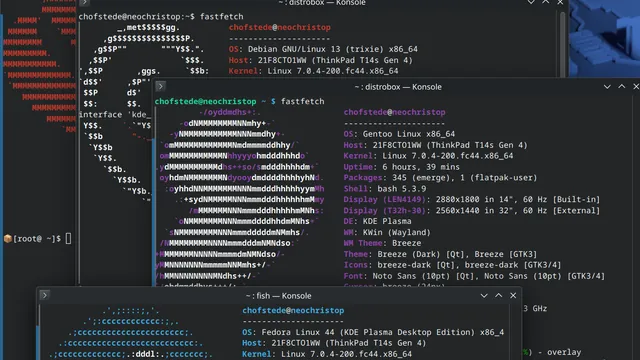
Distrobox: Different Distributions in a Box, Powered by Podman

A “real” RHEL container on a Fedora laptop, an Arch box for the AUR, an Ubuntu box for that one vendor tool that ships .deb files only, all of them with your home directory mounted, your shell history shared, and GUI apps that integrate into your desktop as if they were native. Distrobox uses Podman to make that boring instead of clever, and it pairs especially well with Atomic distributions where the host is meant to stay immutable.

Reproducible Ansible with Execution Environments

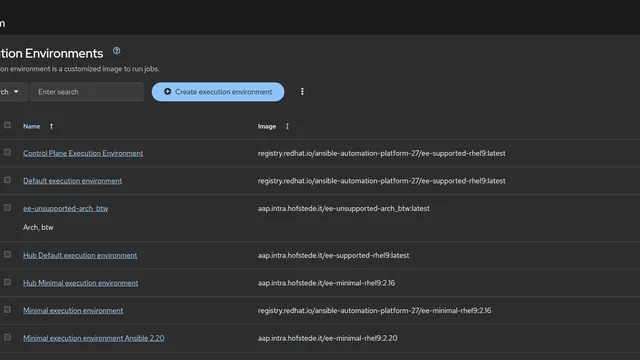
A “control node” with a hand-curated venv works. Until it doesn’t. A colleague has different collection versions, CI installs a slightly newer Python library, and a playbook that ran yesterday now fails. Execution Environments turn the control node into a versioned container image. ansible-builder produces it, ansible-navigator runs against it, and the same artifact ships from your laptop into AAP/AWX without modification.