Mastodon

I’m Christian: Senior Consultant by day, FreeBSD person by conviction. Hands-on writeups about jails, BGP, self-hosting and Linux, all from infrastructure I actually run.

Linux Articles


Newest

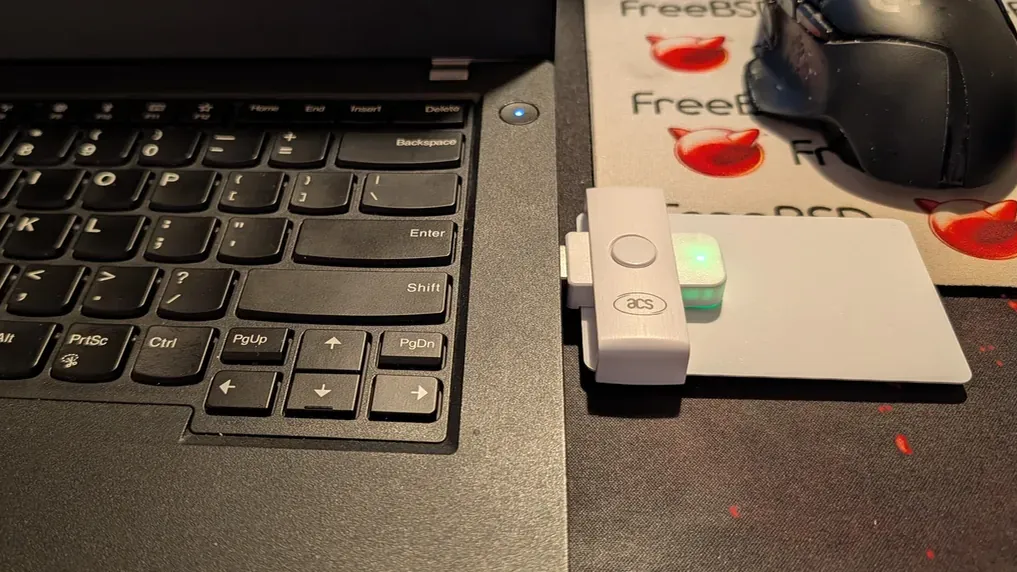
One Old JavaCard, Two Lives: Kerberos PKINIT and SSH From a Drawer Find

An old NXP JavaCard was about to become e-waste. Instead it got an applet loaded with GlobalPlatformPro, became a PKCS#15 token, received a certificate from my IdM CA and fetched a Kerberos ticket via PKINIT. Ninety minutes later the same card was wiped, turned into an OpenPGP card and logged in to a FreeBSD server over SSH. This is how both lives worked, and the six places where they did not work on the first try.
Earlier articles

Git Beyond the Basics: Worktrees, Cherry-Picks and Signed Commits

Almost every Git tutorial stops after add, commit, push and a merge conflict. The tools that make Git pleasant in daily work get far less attention: worktrees for parallel feature branches, cherry-picks for backports, fixup commits and autosquash for clean history, the reflog for recovering from mistakes, and signed commits that prove who made them. This article starts with the mental model and the basics, then works through the parts I actually use, including signing with an OpenPGP smartcard through oct-git.

An IdM Replica at Home: Kerberos That Survives a Dead Tunnel

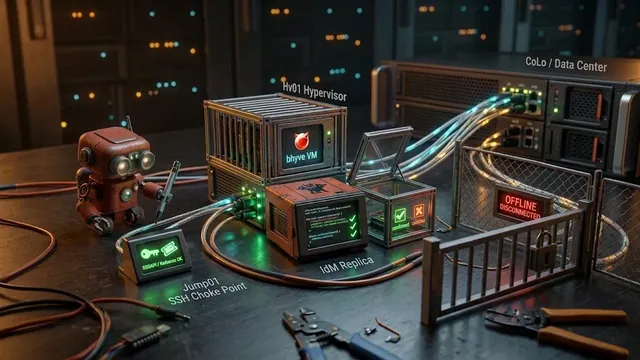
My two Red Hat Identity Management servers live in a data center, and every SSH login at home depends on a WireGuard tunnel to reach them. This is how a third replica ended up in a bhyve VM on my home hypervisor: a DMZ that only exists inside the host, a tunnel that only worked in one direction, location-aware DNS that was less location-aware than I thought, and a test with the tunnel switched off.

A Read-Only AI Reviewer for Forgejo Pull Requests

A small Python service that reviews every pull request on my self-hosted Forgejo with an LLM, posts a summary and inline findings, and is not allowed to do anything else. The interesting part was not getting a model to comment on a diff. It was getting it to stop being confidently wrong about code it had never seen, and making sure a misbehaving or manipulated bot could not change a single line.

Linux Foundationals: From Silicon to Userspace - The Boot and Init Chain

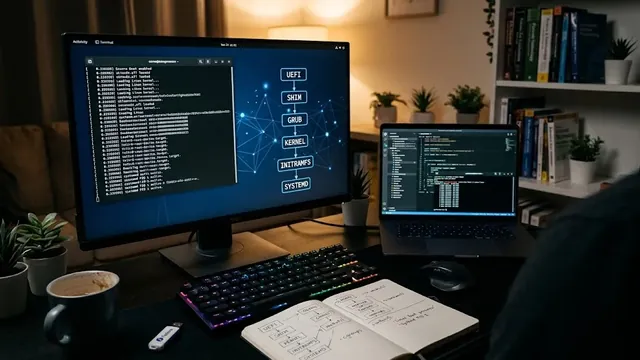
The first article in the Linux Foundationals series. It traces a Fedora system from the UEFI handoff through shim and Secure Boot, MOK enrollment with mokutil, GRUB2 and Boot Loader Specification entries, the dracut initramfs and switch_root, all the way to systemd as PID 1. Then it covers units, dependencies versus ordering, targets, and how to measure and fix a slow boot with systemd-analyze.

WinBoat Broke, Windows Kept Running: dockurr/windows with Plain Podman

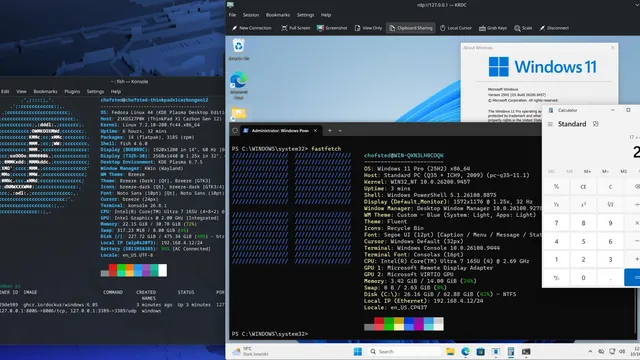
After a cleanup broke my WinBoat installation, I brought the same Windows 11 VM back with a single rootless podman run against the old storage directory. Here is what dockurr/windows actually is, what lives in its storage folder, why NETWORK=nat quietly became passt in rootless Podman, how I verified RDP without opening a window, and a Quadlet unit to keep it around.

Self-Hosted AI: Qwen 3.8 on a Rented Blackwell at 150 Tokens per Second

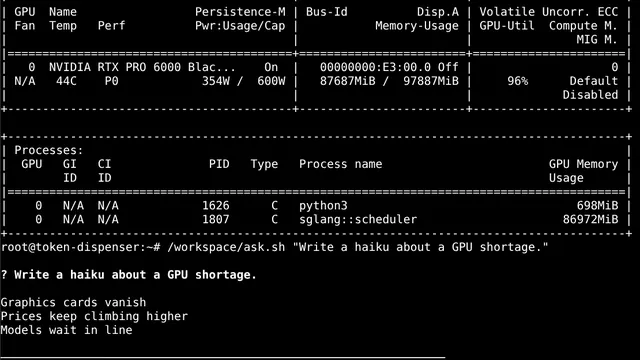
An open-weight Qwen 3.8 27B model, an RTX PRO 6000 Blackwell rented by the hour, and one shell command to start it. For most of my everyday coding it is good enough, it answers at roughly 150 tokens per second, and my prompts stay on infrastructure I chose. Some honest caveats about what “self-hosted” means on someone else’s GPU are included, along with the workflow that has worked best for me: a frontier model for architecture, and a fast open-weight model for the token-heavy implementation loop.

No Proxmox Backup Client for RHEL? Hold My Container Runtime

RHEL 10 on ARM64, a Proxmox Backup Server, and no convenient native client package. I borrowed the client from an old server container, mounted the host root filesystem read-only, and gave SELinux a very specific explanation. Five minutes later, I had an encrypted, incremental backup. There are caveats. Updated 2026-10-18 with a maintained client image for x86_64 and aarch64 on ghcr.io.